• Bitcoin and cryptocurrency has undergone a dramatic transformation, moving from the fringes of the internet to the center of Hollywood and global culture. As we move through 2026, the “celebrity effect” on digital assets has matured from simple social media hype into sophisticated, long-term involvement. High-profile figures are no longer just posting memes; they are becoming foundational players in the digital economy, influencing everything from market sentiment to corporate treasury strategies.

    One of the most significant shifts this year has been the move toward institutional-style advocacy by well-known personalities. While Elon Musk continues to sway markets with a single post on X, others like Michael Saylor and Cathie Wood have bridged the gap between celebrity and high finance. Their constant presence in news cycles has helped normalize the idea of Bitcoin as a “strategic reserve asset,” a concept that gained massive traction following President Trump’s recent positive comments about the U.S. economy and digital innovation. Even legendary investors like Ray Dalio have reinforced this mainstream shift, publicly recommending a baseline allocation to Bitcoin as a “test of time” asset.

  • One of the most common approaches to selling Bitcoin is the strategy of taking profits incrementally rather than all at once. Many experienced investors set price targets at various levels and sell a portion of their holdings at each milestone. This method reduces the psychological pressure of trying to “time the top” perfectly — a near-impossible feat given Bitcoin’s notoriously unpredictable price swings. By selling in stages, investors can capture gains while still maintaining exposure to potential further upside.

    Tax implications are another critical factor that any seller must consider. In most jurisdictions, selling Bitcoin triggers a taxable event. Short-term capital gains, applying to assets held for less than a year, are typically taxed at higher ordinary income rates, while long-term holdings may benefit from reduced rates. Failing to account for these obligations can result in a significant and unexpected tax burden, so many investors consult a financial or tax professional before executing large sales.

    Finally, the motivation behind selling matters greatly. Some investors sell to fund major life expenses — a home, retirement, or education — which represents a fundamentally sound use of accumulated wealth. Others sell out of fear during market downturns, only to regret it when prices recover. Emotional decision-making is one of the greatest pitfalls in cryptocurrency investing. Developing a clear, pre-defined exit strategy before markets become turbulent is widely regarded as one of the most prudent practices any Bitcoin holder can adopt.

  • What was once the domain of tech-savvy enthusiasts and speculative retail traders has undergone a profound transformation. Bitcoin is now firmly embedded in the portfolios of the world’s largest financial institutions, corporations, and even sovereign governments — and the pace of that change accelerated dramatically throughout 2025 into the present year.

    A remarkable structural shift in Bitcoin ownership took place in 2025, with the distribution of the asset moving decisively away from individual investors and toward institutions, companies, and governments. Throughout the year, companies increased their Bitcoin portfolios by 489,000 BTC, achieving the highest net gain among all segments. On the individual investors pulled back, with total Bitcoin holdings in personal wallets decreasing by 696,000 BTC — the largest net decrease on record — effectively providing the supply that enabled institutional acquisitions. 

    The sheer volume of corporate buying tells the story most clearly. Nearly 200 public companies bought up roughly $96 billion in Bitcoin over the course of 2025, while another 68 treasuries added more than $22 billion in Ether to their balance sheets. Leading the charge is Strategy Inc. — formerly known as MicroStrategy — which has built what is now the largest corporate Bitcoin position in the world. Strategy holds 671,268 coins, a portfolio worth approximately $58.9 billion at current prices, and eleven other companies have converted at least $1 billion of cash into Bitcoin on their balance sheets. 

    The beliefs driving these purchases are rooted in a few core convictions. Institutions increasingly view Bitcoin as a hedge against currency debasement and long-term inflation, a “digital gold” capable of preserving value in a world of expanding money supplies. Investors have turned to Bitcoin to potentially improve risk-adjusted returns and as a potential debasement hedge, with Bitcoin commanding a market capitalization of approximately $1.65 trillion — nearly 65% of the entire global crypto market. There is also a powerful momentum argument: as more credible players enter the space, the legitimacy of the asset itself grows, drawing in the buyers.

    These are opinions and don’t represent HearsayOnlineCo ©️©️™️ and its subsidiaries

  • It wouldn’t have seemed possible just twelve months ago. Bitcoin — the world’s largest cryptocurrency and the asset that Wall Street spent years trying to legitimize — is now mired in one of the deepest existential struggles in its history, and for once, the usual rescue playbook isn’t working.

    Bitcoin has shed more than 40% from its October 2025 peak of roughly $125,000, wiping out over $1 trillion in market capitalization. The token currently hovers near $67,000 — its worst start to a year on record, dropping 24% in the first 50 days of 2026. Dip buyers, long a reliable backstop in past downturns, have largely vanished.

    What makes this selloff unique isn’t the magnitude of the decline — Bitcoin has survived larger crashes before. It’s the context. Washington has never been more crypto-friendly. Institutional adoption has never been deeper. Spot Bitcoin ETFs exist. And yet, none of it has been enough to hold the line.

    “Gold is winning the macro-hedge argument. Stablecoins are winning payments. Prediction markets are winning speculation,” Bloomberg analysts have observed, leaving Bitcoin fighting a multi-front war for relevance it once took for granted.

    The capital flows tell a stark story. US-listed gold and gold-themed ETFs pulled in more than $16 billion in the past three months, while spot Bitcoin ETFs saw roughly $3.3 billion in outflows. TradingView Investors who had spent years treating Bitcoin as a digital safe haven have been quietly rotating into the original.

    “People are realizing that Bitcoin is what it’s always been — which is simply a speculative asset,” TradingView said Tom Essaye, president of Sevens Report and a former Merrill Lynch trader. “It’s not an inflation hedge — there are other better hedges, frankly, where you don’t have to worry about the volatility. And it’s not a chaos hedge either.” TradingView

    The crisis of narrative is perhaps Bitcoin’s most damaging wound. Ironically, Bitcoin’s unraveling began during its own rise. The 2025 bull run triggered a rush of institutional infrastructure meant to cement its legitimacy. Instead, it stripped the asset of its mystique. Yahoo Finance The cipher of libertarian finance became a ticker in a brokerage drop-down menu.

    “After more than 15 years of Bitcoin, we’re no closer to knowing what its point is,” Futurism said Tim Shuffelt, investment reporter at the Globe and Mail. “The central story of Bitcoin was ‘number go up’ and we don’t have that anymore,” Yahoo Finance added Owen Lamont, a portfolio manager at Acadian Asset Management. “We have number go down. That is not a good story.” Yahoo Finance

    Bulls remain defiant. Strategy executive chairman Michael Saylor — whose firm holds the largest corporate Bitcoin treasury in the world — declared this week that “spring is coming” and reiterated his belief that Bitcoin is ultimately headed to $1 million per coin. “It’s like a religion for many, and religious faith is hard to shake,” TradingView noted Michael Rosen, chief investment officer of Angeles Investment Advisors.

    Yet the structural questions persist. Bitcoin’s greatest threat isn’t a competitor — it’s drift. The slow bleed of attention, capital and conviction that comes when no single narrative can hold. TradingView For an asset whose value rests almost entirely on belief, that may be the most dangerous threat of all.


    📝 ESSAY

    The Stories We Told About Bitcoin

    For most of its existence, Bitcoin didn’t need to justify itself — it just needed to go up. Price appreciation was the narrative, and the narrative was sufficient. But in early 2026, with Bitcoin down more than 40% from its peak and over a trillion dollars in market value erased, that story has finally broken down. What we are witnessing is not merely a bear market. It is a reckoning with what Bitcoin actually is, now that what it was supposed to be has been tested and found wanting.

    Bitcoin has historically been sold to investors in three distinct archetypes: digital gold, freedom money, and institutional reserve asset. Each identity served a different audience, and for a time, they all coexisted comfortably under the same tent. The problem is that 2025 and 2026 subjected all three to the kind of real-world pressure that bull markets conveniently delay. Against actual gold — which has surged while Bitcoin fell — the “digital gold” thesis has collapsed in both correlation and capital flows. Against stablecoins, the “freedom money” case withers, since stablecoins offer borderless, permissionless value transfer without the volatility. Against prediction markets and high-velocity alternatives, Bitcoin’s role as the premier speculative vehicle is fading. It is losing on every front simultaneously, which is an unusual and particularly difficult position to recover from.

    There is a deeper irony at the heart of this crisis. Bitcoin’s institutional triumph — the ETFs, the corporate treasuries, the government-friendly regulatory posture — may have sealed its cultural fate. An asset that once demanded conviction, technical literacy, and ideological commitment has been smoothed into a product anyone can buy in three clicks. In doing so, it may have traded away the one thing that no financial instrument can manufacture: genuine belief. The scarcity of Bitcoin’s supply is coded into its protocol, but as one analyst observed, the scarcity that truly moves markets is scarcity of attention — and in a world of infinite financial products, attention does not wait around. Bitcoin got everything it wanted from the establishment, and the establishment gave it the same treatment it gives everything else: indifference when the returns disappear.

    None of this means Bitcoin is finished. It has survived predictions of its death before and likely will again. Its network remains the most secure and decentralized in crypto. Its 60% dominance of the total crypto market reflects a kind of institutional gravity that does not vanish overnight. But survival and relevance are not the same thing, and the current moment demands that Bitcoin’s believers answer a question that rising prices once made irrelevant: in a world where gold hedges better, stablecoins pay better, and everything speculates better — what, exactly, is Bitcoin for? The honest answer, for now, is that nobody quite agrees. And in markets built on narrative, that uncertainty is its own kind of price.

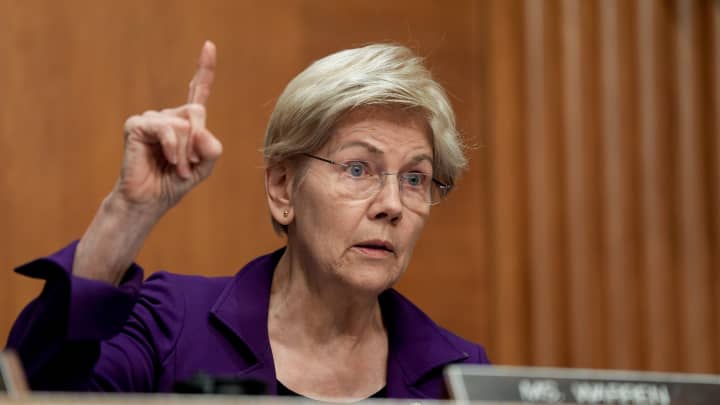
  • In February 2026, Bitcoin and the broader cryptocurrency space continue to attract high-profile attention from celebrities, business leaders, and political figures, blending glamour, finance, and policy in ways that often overshadow pure market fundamentals. A standout event was President Donald Trump’s Mar-a-Lago crypto summit, hosted by his family’s World Liberty Financial venture, which drew an eclectic mix of Wall Street executives, crypto insiders, and entertainers. Attendees included Goldman Sachs CEO David Solomon, who revealed he personally holds a “very, very limited” amount of Bitcoin—marking a notable shift for the traditional finance titan—and rapper Nicki Minaj,

  • February 17, 2026: Nakamoto Inc. (NASDAQ: NAKA) (“Nakamoto” or the “Company”) today announced that it has entered into merger agreements to acquire BTC Inc, the leading provider of Bitcoin-related media and events, and UTXO Management GP, LLC (“UTXO”), an investment firm focused on private and public Bitcoin companies (collectively, the “Transaction”). The Transaction is expected to close in the first quarter of 2026, subject to customary closing conditions.

    The Company’s option to acquire BTC Inc and UTXO, through BTC Inc’s call option with UTXO, was previously disclosed as part of Nakamoto’s proposed merger with Nakamoto Holdings, Inc. (“Nakamoto Holdings”). The Marketing Services Agreement with BTC Inc (the “MSA”), which the Company assumed from Nakamoto Holdings in the merger last year, outlines the terms of the Company’s option and was publicly filed and approved by the Company’s shareholders in connection with that transaction. Following shareholder approval, Nakamoto, BTC Inc, and UTXO engaged in extensive joint marketing initiatives across BTC Inc’s media and events platforms. Nakamoto exercised its call option with BTC Inc and BTC Inc exercised its call option with UTXO concurrently with signing of the merger agreements. No additional Nakamoto shareholder approval is required to complete the Transaction.

    “Bringing BTC Inc and UTXO into Nakamoto has been a part of our vision since day one,” said David Bailey, Chairman and CEO of Nakamoto. “We intend to operate a portfolio of companies across media, asset management, and advisory services that can scale with Bitcoin’s long-term growth. BTC Inc and UTXO are global leaders in Bitcoin media and asset management. This transaction signifies the first step of the company we intend to build, and we’re just getting started.”

    Nakamoto’s acquisition of BTC Inc and UTXO represents a significant addition to the Company’s portfolio and advances its stated mission to develop an ecosystem of Bitcoin-native companies. The companies combine durable operating businesses, global distribution, and disciplined capital allocation into a single “flywheel”. BTC Inc and UTXO are expected to provide recurring earnings to strengthen the Company’s balance sheet and support growth initiatives, including additional Bitcoin accumulation and strategic acquisitions. The Transaction is intended to further establish Nakamoto as a diversified Bitcoin operating company with a global brand, established distribution networks, and institutional capabilities across media, asset management, and advisory services.

    These are opinions and don’t represent HearsayOnlineCo ©️©️™️ and its subsidiaries

  • Ransomware: Bitcoin remains a favored tool for hackers in extortion cases.

  • the SEC charged8 celebrities, including Lindsay Lohan, Jake Paul, and Soulja Boy, for illegally promoting crypto assets without disclosing compensation.

  • Doug Liman’s ‘Killing Satoshi’ to Blend Bitcoin with Controversial AI Tech

    LOS ANGELES — Director Doug Liman is set to tackle the digital age’s greatest enigma with his upcoming biopic-thriller, Killing Satoshi. Starring Casey Affleck and Pete Davidson, the film aims to dramatize the hunt for Satoshi Nakamoto, the anonymous creator of Bitcoin whose dormant wallet holds an estimated $120 billion fortune. Described by producers as a “David and Goliath” story, the narrative follows a pair of unlikely anti-heroes as they navigate a web of global conspiracies involving Wall Street, Silicon Valley, and government entities determined to keep Nakamoto’s identity—and the keys to his fortune