mil-in-neal-news.online
Utilizing Bitcoin assets
-

-
-

Guests attend the Bloomberg Vanity Fair White House Correspondents’ Association (WHCA) dinner afterparty in Washington, D.C., U.S., on Saturday, May 3, 2014. The WHCA, celebrating its 100th anniversary, raises money for scholarships and honors the recipients of the organization’s journalism awards. Photographer: Andrew Harrer/Bloomberg via Getty Images -
Things should not be nefarious and people are participating in Bitcoin likely

-
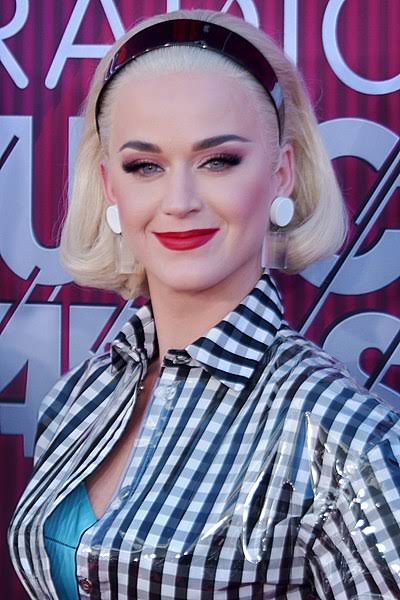
The crypto community has even developed tongue-in-cheek “celebrity indicators” for Bitcoin pricing: Paris Hilton’s public enthusiasm has historically coincided with market bottoms, while Katy Perry’s crypto posts have appeared near market peaks
-

Sydney Sweeney never launched a coin. She never posted a Bitcoin endorsement, appeared at a blockchain conference, or announced she was putting her assets. And yet, her name has appeared in crypto more than almost any other actress in Hollywood — not because of what she chose, but because of what was done to her.
The story of Sydney Sweeney and cryptocurrency is a story about exploitation, digital crime, and the dark machinery that turns fame into a weapon. It is also, quietly, a story about how broken the security of our most-used platforms really is.
It started in January 2024, when Sweeney’s popularity exploded following a viral appearance on the YouTube series Hot Ones. Her smile became a meme. Her face was everywhere. And criminals noticed.
Hackers gained control of her X account and used it to promote $MILK, a Solana-based token created just days earlier. Bankrate The posts were crude, sexualized, and immediately suspicious to anyone paying attention — but on a platform with millions of followers, even a few minutes of exposure is enough.
At the time the hacked post was deleted, $MILK had already generated millions in 24-hour trading volume. Bankrate The account was eventually recovered and the posts removed, but the damage — financial and reputational — had been done to the unsuspecting fans who bought in.
The method was SIM swapping — one of the most ruthlessly effective tools in the modern hacker’s arsenal. SIM swappers take over a target’s phone number and reroute text messages and phone calls to a device the attackers control — sometimes through social engineering a telecom representative, sometimes by physically walking into a store pretending to be the victim.
The administrator of a Telegram channel associated with the $SWEENEY token admitted responsibility for the hack, claiming to also be behind the compromised accounts of 50 Cent and Hulk Hogan.
These are opinions and don’t represent HearsayOnlineCo ©️©️™️ and its subsidiaries
-

While Nas came to crypto through music and venture capital, Gwyneth Paltrow took a more formal route. The Oscar-winning actress and Goop founder quietly became one of the most influential Hollywood voices in the Bitcoin space by aligning herself with real companies building real infrastructure.
She joined the Bitcoin wallet platform Abra as an advisor, becoming one of the first major Hollywood figures to take a formal role within the crypto industry. She also ran a high-profile Bitcoin giveaway for her Twitter followers and made investments in a Bitcoin mining company with a focus on sustainable, zero-carbon energy production — aligning her crypto interests with her well-known passion for wellness and environmental responsibility.
Her involvement stood out from typical celebrity crypto stunts precisely because of its substance: advisory roles, equity investments, and a long-term view rather than a quick promotional deal.
Both Nas and Paltrow represent a generation of early celebrity adopters who engaged with Bitcoin thoughtfully — and were rewarded for it. Their stories contrast sharply with those of celebrities who promoted questionable tokens without due diligence and later faced legal consequences.
These are opinions and don’t represent HearsayOnlineCo ©️©️™️ and its subsidiaries
-
Bitcoin’s future price. The range of credible expert forecasts for 2026 alone spans from $55,000 to well over $200,000 — a chasm that reflects genuine uncertainty about macro conditions, regulatory outcomes, and the pace of adoption.
Standard Chartered has projected a price target of around $150,000 for 2026, while Ark Invest has outlined bullish scenarios exceeding $250,000. Bloomberg Intelligence sees Bitcoin consolidating above $100,000 by 2026–27. On the more aggressive end, BitMEX co-founder Arthur Hayes has floated targets as high as $500,000–$750,000 should US monetary policy pivot sharply dovish.
The bear case is equally stark. Some technical analysts, pointing to on-chain data showing long-term holders selling at a loss, argue that a 70–76% correction from the October 2025 peak is possible — which could theoretically drag Bitcoin toward the $30,000–$50,000 range before the next structural recovery.
For users holding Bitcoin, the consensus view — even among skeptics — is that Bitcoin is unlikely to lose its status as the dominant digital asset. The question is not if, but when and at what price the next meaningful leg upward materializes.
These terms do not represent HearsayOnlineCo or its subsidiaries ©️©️™️
-
-
First, the supply dynamic. Bitcoin’s fourth halving in April 2024 cut the daily issuance of new coins roughly in half. The effect on supply is mechanical and inevitable — fewer new coins entering circulation means that sustained demand, even at modest levels, exerts upward pressure on price over time. This is not a theory. It’s arithmetic.
Second, the regulatory clarity that has emerged in the United States over the past eighteen months has removed a significant overhang from institutional decision-making. Asset managers who were previously unable to justify Bitcoin exposure due to regulatory uncertainty now have a much cleaner path. The ETF structure itself is part of that clarity — it provides a familiar, regulated vehicle that fits neatly into existing compliance frameworks.
Third, and perhaps most underappreciated, is the correlation story. Bitcoin’s relationship with traditional asset classes continues to evolve. During parts of the 2026 correction, Bitcoin tracked tech stocks downward — frustrating for those who bought the digital gold narrative. But over longer time horizons, the correlation profile remains distinct enough to offer genuine diversification value. Institutional allocators are increasingly sophisticated about this nuance, treating Bitcoin as a unique factor exposure rather than a simple risk-on/risk-off trade.
The ETF era isn’t just about access. It’s about legitimacy. And that legitimacy, once established, is remarkably durable.

 mil-in-neal-news.online